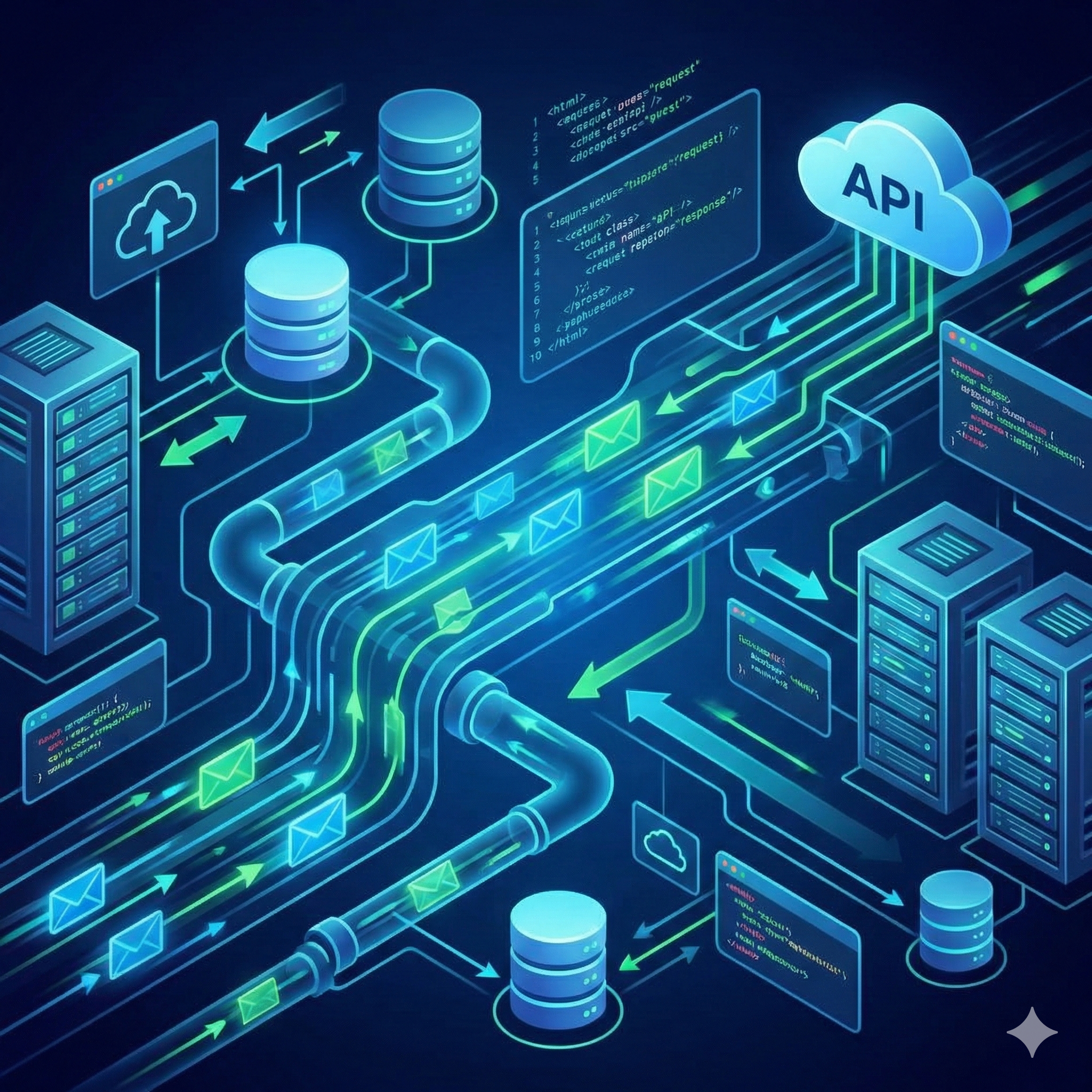
As an IV&V company, we cover the full lifecycle of API testing—from test planning and analysis to design, implementation, and execution.
1. Test Planning and Design
We perform a detailed analysis of API documentation (such as Swagger/OpenAPI specifications), design documents, and requirements definitions you provide to identify the target API endpoints, requests and responses, data formats, authentication methods, and other key elements. Based on this analysis, we define the test scope and objectives, and select the appropriate tools. We establish an optimal test strategy and plan aligned with your business requirements.
For each API endpoint, we design concrete test cases that cover a wide range of scenarios, including positive and negative scenarios, boundary values, data validation, and error handling. We use API testing tools, including our proprietary tool RakAPIt, to efficiently create these test cases.
We then prepare the necessary test data, ensuring comprehensive coverage from functionality and performance to security.
2. Test Execution
We execute the designed test cases to perform functional testing (verifying that the API behaves as expected), performance testing (evaluating response times and load tolerance), and security testing (vulnerability assessment). We effectively leverage API testing tools, including our proprietary tool RakAPIt, to actively promote test automation. We also perform regression testing to confirm that recent fixes have not introduced unintended side effects.
3. Defect Reporting and Analysis
We document any defects identified during testing in a clear and structured report, including detailed conditions, reproduction steps, and deviations from expected results. When needed, we also support root‑cause analysis and help identify the areas requiring correction.
4. Test Result Reporting and Improvement Recommendations
We deliver a comprehensive report summarizing the overall test results and providing an objective evaluation of the API’s quality status. Based on the insights gained through testing, we propose concrete improvement measures for future quality enhancement, including refinements to API design, enhancements to the development process, and further integration of test automation.
From these steps, we derive the following outcomes.
Improved System Integration Stability:
By verifying accurate data exchange and processing between APIs, we ensure stable operation across the entire system and prevent integration‑related issues before they occur.
Performance Optimization:
By measuring and analyzing API response times and throughput to identify bottlenecks, we contribute to improving overall system performance.
Security Risk Reduction:
By assessing vulnerabilities in authentication and authorization, as well as risks of data exposure, we prevent unauthorized access and information leakage through APIs.
Maintainability Enhancement:
By verifying the consistency between API specifications and their implementations, we support the creation of high‑quality API designs that make future changes and extensions easier to perform.
Development Efficiency Improvement and Cost Reduction:
By identifying and resolving API issues early in the development lifecycle, we significantly reduce the rework‑related effort and costs.