Is your API connected “Chanto”? — Properly, Securely, and Reliably

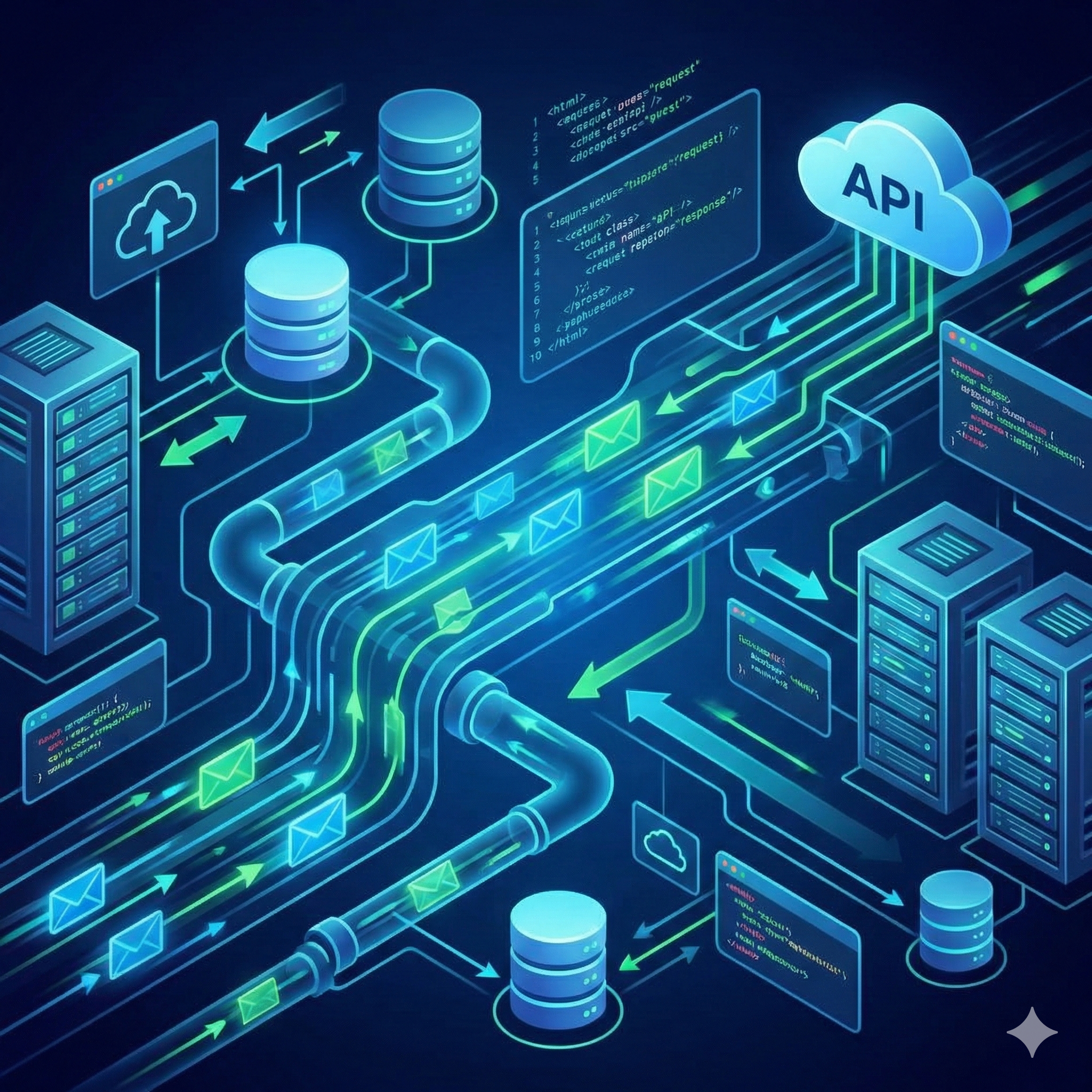
In modern software development, APIs (Application Programming Interfaces) serve as the backbone for system integration and data exchange. Web services, mobile applications, and IoT devices all communicate through APIs to deliver business value. However, when API quality is poor, it can undermine the stability and performance of the entire system, leading directly to business risks.

Our API Testing thoroughly validates the quality of the APIs that form the foundation of your system’s stable operation. By evaluating APIs from multiple perspectives, such as functionality, performance, security, and reliability, we identify potential issues early and strengthen the overall robustness of your system.

Why Clients Choose Us

仕様書がなくても対応可能

Efficiency Through API Testing Tools

Achieve Reduced Effort and Faster Delivery
By leveraging our proprietary API testing cloud service, RakAPIt, we significantly streamline the entire process from test case generation to execution. Compared with manual testing, this approach eliminates human error and enables validation at exceptional speed, allowing you to accelerate your development cycle while reducing overall costs.

ISTQBパートナー

ISTQB-Certified Expertise

Uncover Complex Logic with Globally Recognized Expertise
As an official partner of ISTQB (International Software Testing Qualifications Board), the international certification body for software testing professionals, our highly skilled engineers design comprehensive test cases. Even when dealing with invisible and highly complex backend behaviors, we apply proven, globally recognized methodologies to ensure precise and reliable quality assurance.

豊富な実績、幅広いドメイン知識

Extensive Experience and Broad Domain Knowledge

Understanding the Business Logic Behind Your Data
Our engineers possess specialized expertise across a wide range of industries, including finance, insurance, manufacturing, retail, logistics, advertising, real estate, and healthcare. This deep domain knowledge enables us to perform thorough, real‑world validation, not only checking whether responses are returned correctly but also examining industry‑specific data processing, security requirements, and external system integrations to ensure practical, production‑ready quality.

Service Overview

 
As an IV&V company, we cover the full lifecycle of API testing—from test planning and analysis to design, implementation, and execution.


1. Test Planning and Design

We perform a detailed analysis of API documentation (such as Swagger/OpenAPI specifications), design documents, and requirements definitions you provide to identify the target API endpoints, requests and responses, data formats, authentication methods, and other key elements. Based on this analysis, we define the test scope and objectives, and select the appropriate tools. We establish an optimal test strategy and plan aligned with your business requirements.

For each API endpoint, we design concrete test cases that cover a wide range of scenarios, including positive and negative scenarios, boundary values, data validation, and error handling. We use API testing tools, including our proprietary tool RakAPIt, to efficiently create these test cases.

We then prepare the necessary test data, ensuring comprehensive coverage from functionality and performance to security.

 
2. Test Execution
We execute the designed test cases to perform functional testing (verifying that the API behaves as expected), performance testing (evaluating response times and load tolerance), and security testing (vulnerability assessment). We effectively leverage API testing tools, including our proprietary tool RakAPIt, to actively promote test automation. We also perform regression testing to confirm that recent fixes have not introduced unintended side effects.

 
3. Defect Reporting and Analysis
We document any defects identified during testing in a clear and structured report, including detailed conditions, reproduction steps, and deviations from expected results. When needed, we also support root‑cause analysis and help identify the areas requiring correction.

 
4. Test Result Reporting and Improvement Recommendations
We deliver a comprehensive report summarizing the overall test results and providing an objective evaluation of the API’s quality status. Based on the insights gained through testing, we propose concrete improvement measures for future quality enhancement, including refinements to API design, enhancements to the development process, and further integration of test automation.

 
From these steps, we derive the following outcomes.

Improved System Integration Stability:
By verifying accurate data exchange and processing between APIs, we ensure stable operation across the entire system and prevent integration‑related issues before they occur.

Performance Optimization:
By measuring and analyzing API response times and throughput to identify bottlenecks, we contribute to improving overall system performance.

Security Risk Reduction:
By assessing vulnerabilities in authentication and authorization, as well as risks of data exposure, we prevent unauthorized access and information leakage through APIs.

Maintainability Enhancement:
By verifying the consistency between API specifications and their implementations, we support the creation of high‑quality API designs that make future changes and extensions easier to perform.

Development Efficiency Improvement and Cost Reduction:
By identifying and resolving API issues early in the development lifecycle, we significantly reduce the rework‑related effort and costs.


Our Process

Quality Assessment and Consultation

• Understanding the target service
• Identifying quality issues
• Proposing solutions to address quality issues

Output:
• Quality improvement proposal

Test Planning

• Clarifying test objectives
• Defining the test approach
• Updating the test plan
• Considering test automation

Output:
• Test plan

Monitoring and Control

• Collecting metrics
• Tracking progress
• Controlling the overall test process

Test Analysis

• Analyzing the test object based on the test basis
• Extracting and defining test conditions

Output:
• Test design specification

Test Design

• Applying test techniques (Equivalence Partitioning, Boundary Value Analysis, Decision Table Testing, Pairwise Testing, State Transition Testing, Orthogonal Arrays Testing, etc.)
• Designing the test architecture
• Creating detailed test designs

Output:
• Test specification

Test Implementation

• Creating test cases
• Creating test procedures
• Creating test suites
• Setting up the test environment

Outputs:
• Test cases
• Test procedures

Test Execution

• Executing tests
• Verifying fixes

Outputs:
• Test logs
• Incident reports (critical incidents are reported immediately)
• Progress reports

Test Completion

• Reporting test results

Outputs:
• Test summary report
• Quality improvement proposal

Staying Ahead of the Latest QA Trends

We regularly host Ques, a specialized event for QA engineers, to stay updated on the latest QA trends from various companies and continuously enhance our skills and services.

Our API Testing keeps your system integration “Chanto”
— stable and reliable.

Ready to enhance your process and product quality? Contact us today.